Project Overview
OrcaFi already had an NFT marketplace — OrcaFi Swap extended the ecosystem into token trading, giving users a decentralized exchange where they could swap assets, provide liquidity, and trade without handing custody to a centralized platform. The project was scoped as a solo smart contract build and delivered in one week, which required leaning on proven DeFi primitives — specifically Uniswap V3 design patterns — rather than reinventing AMM logic from scratch. The focus was on getting the core swap and liquidity mechanics right, layering in MEV protection, and keeping gas costs as low as the contract design would allow. Speed of delivery mattered, but not at the cost of contract correctness on a platform handling real trading volume.
Key Features
- Automated token swapping powered by AMM algorithms aligned with Uniswap V3 architecture
- Liquidity pool creation and management with dynamic fee structures
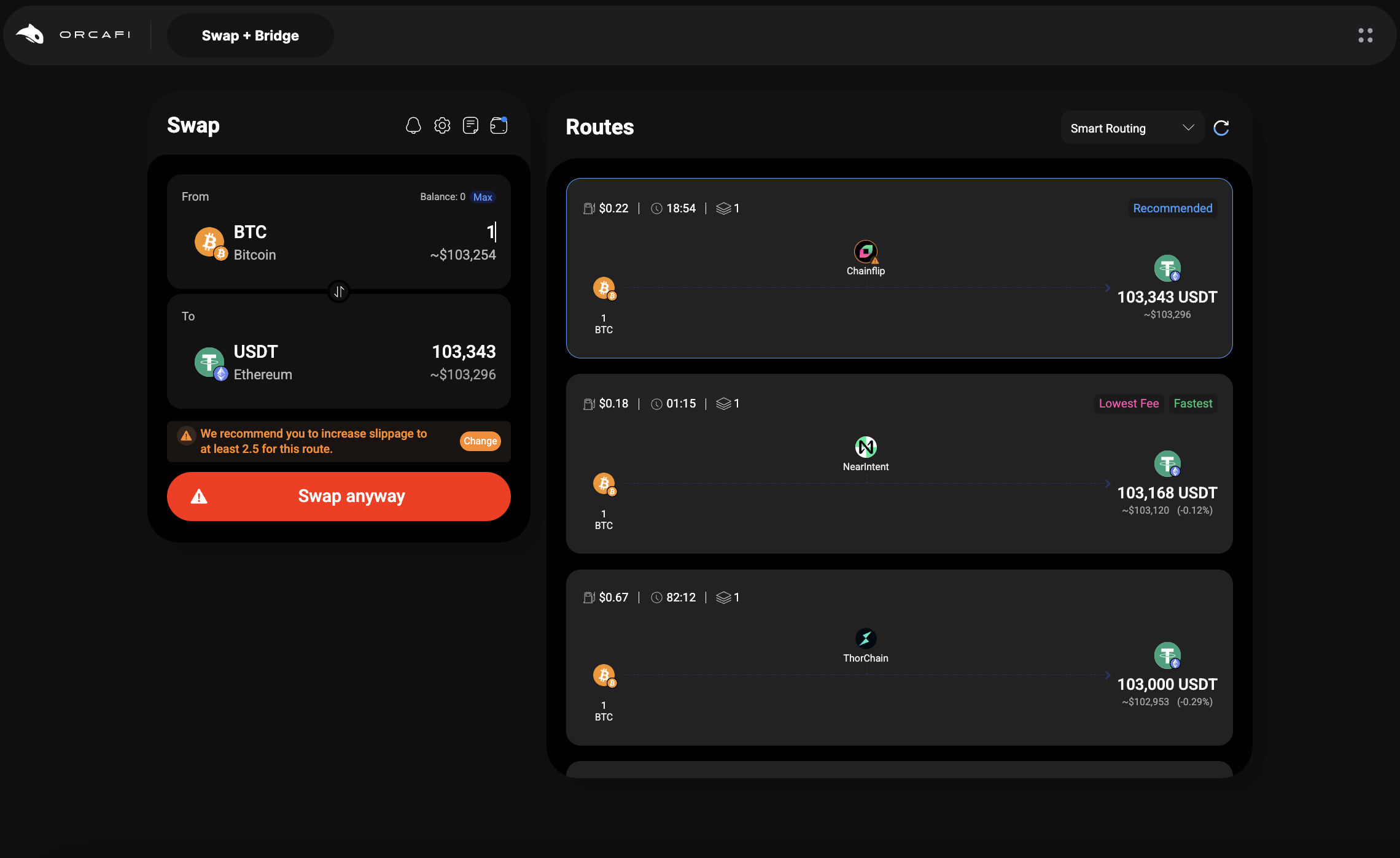
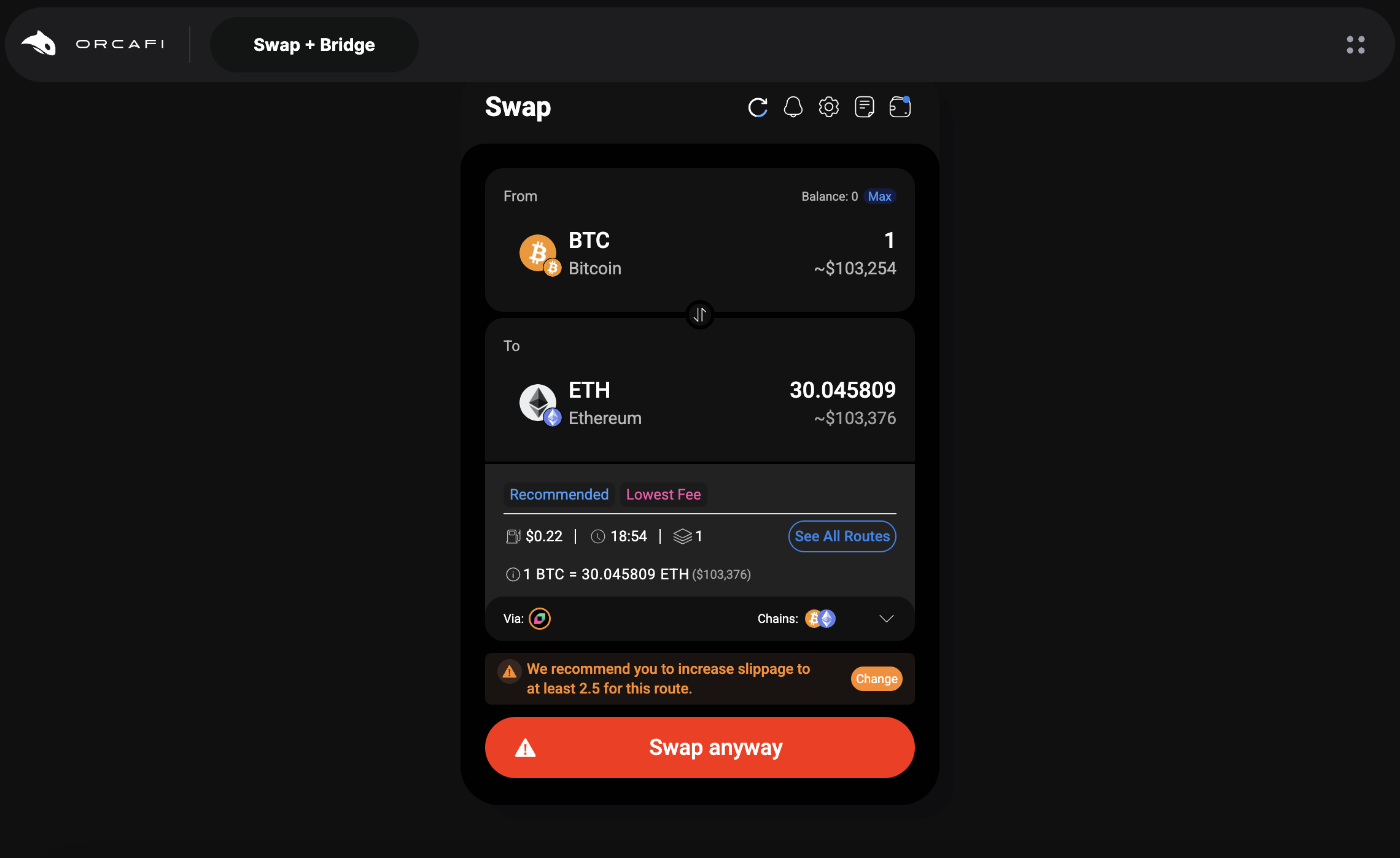
- Price impact analysis and slippage protection surfaced to users before trade confirmation
- MEV and front-running protection mechanisms built into the contract layer
- Multi-token support covering 50+ integrated assets
- Transaction history tracking for user trade activity
Technical Implementation
The swap contracts were written in Solidity, following Uniswap V3 design patterns for concentrated liquidity and efficient price curve management — a deliberate choice that gave the platform battle-tested AMM logic rather than a custom implementation with unknown edge cases. Web3.js connects the React frontend to the contracts, handling wallet interactions, swap previews, and transaction submissions. Dynamic fee structures in the liquidity pool contracts adjust based on pool conditions, balancing liquidity provider incentives against trader costs. MEV protection was implemented at the contract level to reduce front-running risk — a common and costly problem on public mempools that most DEX users don't realize is happening to them. Gas optimization was applied throughout the Solidity codebase, prioritizing the highest-frequency operations — swaps and liquidity additions — where savings per transaction compound quickly at volume.
Challenges & Solutions
Building a DEX in one week is only feasible if you're not starting from first principles on the AMM math. The decision to align with Uniswap V3 patterns was deliberate — it meant the core swap logic was grounded in one of the most thoroughly audited DeFi codebases in existence, which compressed both development time and security risk. MEV and front-running are problems that many DEX implementations ignore until they become user complaints — we integrated protective mechanisms at the smart contract level from the start rather than treating it as a post-launch concern. Liquidity pool management with dynamic fees needed careful calibration: fees that are too high push traders away, too low and liquidity providers don't have enough incentive to stay. The fee structure was modeled against realistic trading scenarios before deployment. Gas optimization across swap operations was methodical — each operation in the swap path was reviewed for unnecessary storage reads, redundant computations, and opportunities to batch or defer on-chain work.
Results & Impact
OrcaFi Swap facilitated over $1M in total trading volume through the decentralized exchange — a meaningful number for a platform built solo in a week. The 0.1% average slippage across trades reflects well-calibrated AMM mechanics and liquidity depth across the integrated token pairs. A 99.9% transaction success rate means the swap logic handles edge cases — insufficient liquidity, price movement during confirmation, gas estimation failures — without leaving users with failed transactions and wasted gas. Supporting 50+ tokens from launch gave the platform enough breadth to be a practical trading venue rather than a limited demo.