

Project Overview
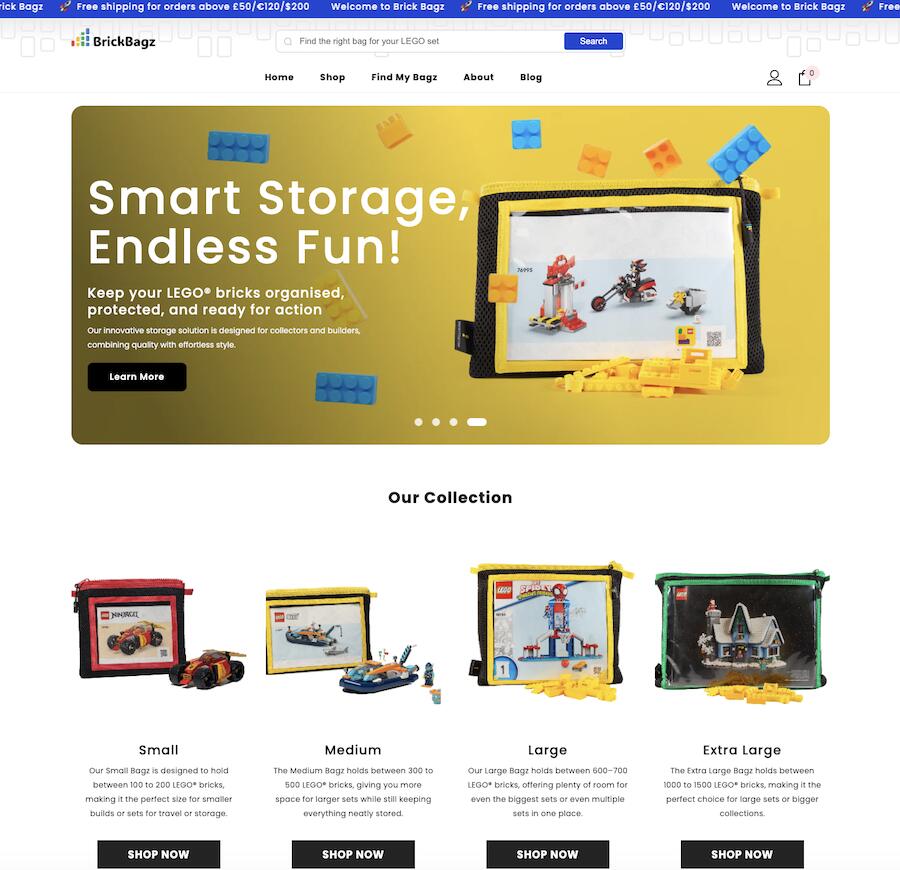
BrickBagz sells premium storage solutions for LEGO® collectors — a niche with passionate buyers who know exactly what they want and leave fast if they can't find it. The store had two problems working against that buyer behavior: a 5.8-second load time that was losing visitors before the first product appeared, and a 300+ product catalog that the client was managing manually with no automated way to keep search results current. The brief was to fix both without locking the business into expensive third-party app subscriptions it didn't need. We built a bespoke Shopify Liquid theme from scratch and engineered a Google Sheets–powered smart search system that lets the client manage the entire product catalog from a spreadsheet while customers get real-time, predictive search results that update every five minutes automatically. The result is a store that performs like an enterprise Shopify build but costs and operates like a lean independent brand.
Key Features
- Google Sheets API integration powering a real-time smart search system — the client manages 300+ products in a spreadsheet and search results update automatically every five minutes with zero developer involvement
- Bespoke Shopify Liquid theme built from scratch for BrickBagz's brand identity, speed requirements, and product discovery use cases specific to the LEGO storage niche
- Sub-1.2-second page load time reduced from 5.8 seconds — achieved through WebP image conversion, lazy loading, Cloudflare CDN, and optimized Liquid render logic
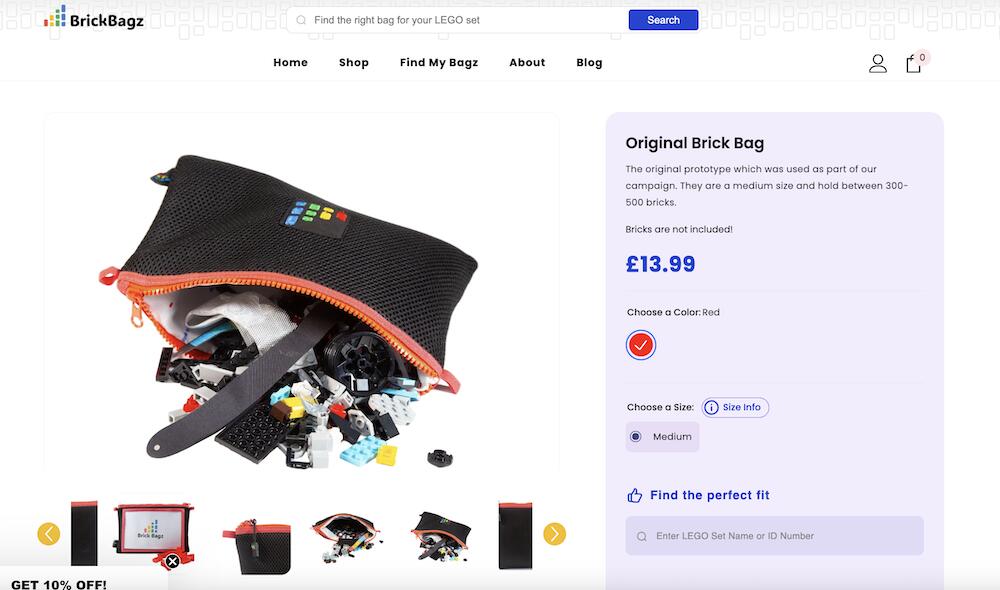
- Instant predictive product search with AJAX-powered results that surface relevant products as customers type, without page reloads
- Mobile-first UX with touch-optimized navigation, clear product hierarchy, and a checkout flow designed to minimize abandonment on the brand's predominantly mobile traffic
- SEO-ready technical architecture including schema markup, semantic HTML structure, and optimized heading hierarchy across all page templates
- Shopify REST and GraphQL API integration for scalable product data management as the catalog grows beyond 300 SKUs
Technical Implementation
The Google Sheets smart search is the most technically interesting part of this build and the feature that makes it genuinely different from a standard Shopify project. The system works like this: the client maintains their product catalog in Google Sheets — names, variants, descriptions, availability — and a scheduled sync pulls that data via the Google Sheets API every five minutes and updates the Shopify search index automatically. Customers experience instant predictive search powered by AJAX and the Fetch API, with results appearing as they type without any page reload. The entire system runs without a paid search app, which eliminates a recurring cost and removes a dependency that could break with Shopify app updates. The Shopify Liquid theme was written from scratch using Shopify's REST and GraphQL APIs for data access, with render logic optimized at the template level to reduce server processing time before the browser starts loading assets. Images were converted to WebP and lazy-loaded below the fold, CSS and JavaScript were minified and deferred where not render-critical, and Cloudflare CDN was configured for global edge delivery. Checkout was rebuilt mobile-first — over the majority of BrickBagz traffic comes from mobile, and the checkout flow was designed around that reality rather than adapted from a desktop layout. Technical SEO was built into the theme architecture: schema markup, semantic HTML, optimized title and meta templates, and a heading structure that maps to LEGO storage product search intent.
Challenges & Solutions
A 5.8-second load time is rarely one thing — it's an accumulation of unoptimized images, render-blocking scripts, slow server processing from bloated Liquid logic, and no CDN configuration. We audited each layer separately using Core Web Vitals data and addressed them in order of LCP impact rather than just total page weight. Getting to 1.2 seconds required removing or deferring everything that wasn't needed for the above-the-fold render, which meant making tough calls on which theme features were worth the load cost and which weren't. The Google Sheets integration presented its own challenges: Google Sheets API has rate limits and the sync needed to be reliable enough that search results never went stale in a way customers would notice, but efficient enough not to hammer the API or create sync conflicts when the client edited the sheet mid-sync. A five-minute polling interval with error handling and fallback caching resolved both concerns cleanly. Managing 300+ products for a niche brand like BrickBagz also meant the search had to surface the right product from LEGO-specific terminology — storage by set size, brick count, collector tier — that generic Shopify search handles poorly. The Google Sheets–powered system let us structure search logic around how BrickBagz customers actually describe products rather than generic e-commerce taxonomy. Mobile checkout friction was the final major conversion risk: LEGO storage buyers are often making considered purchases rather than impulse buys, which means a complicated checkout gives them time to reconsider. We stripped the checkout to the minimum viable steps and placed express payment options — Shop Pay, PayPal — at the first decision point rather than the final one.
Results & Impact
BrickBagz went from a 5.8-second store with a manually managed product catalog to a 1.2-second store where inventory, search, and product discovery update automatically every five minutes — with near-zero maintenance overhead for the client. The load time reduction alone moved the store from a failing Core Web Vitals score to a passing one, which affects both Google search ranking and paid ad quality scores directly. The Google Sheets smart search system eliminated the manual work of keeping 300+ products discoverable and gave customers a search experience that matches what they'd expect from a much larger brand. The business now runs a scalable Shopify ecosystem that can grow to 500, 1,000, or more products without requiring a platform migration, an enterprise app subscription, or a developer to manage catalog updates.