Project Overview
HitTheCircle already had a token in circulation — the next challenge was giving holders a reason to keep it rather than sell it. A staking platform solves that by rewarding long-term commitment, but only if the reward logic is fair, transparent, and actually difficult to game. I built the platform solo over three months, covering everything from the smart contract staking logic and compound reward algorithms to the React frontend and Web3 integration. The platform needed to feel simple enough for everyday users to manage their stakes without understanding how the contracts worked underneath — that tension between contract complexity and UI simplicity was a consistent design challenge throughout.
Key Features
- Flexible staking periods letting users choose lock durations that suit their risk appetite
- Compound reward calculation that accrues proportionally to stake size and duration
- Governance participation rewards for holders who engage with on-chain voting
- Staking pool management with clear visibility into pool composition and yield
- Automated reward distribution handled entirely by smart contract logic, no manual triggers
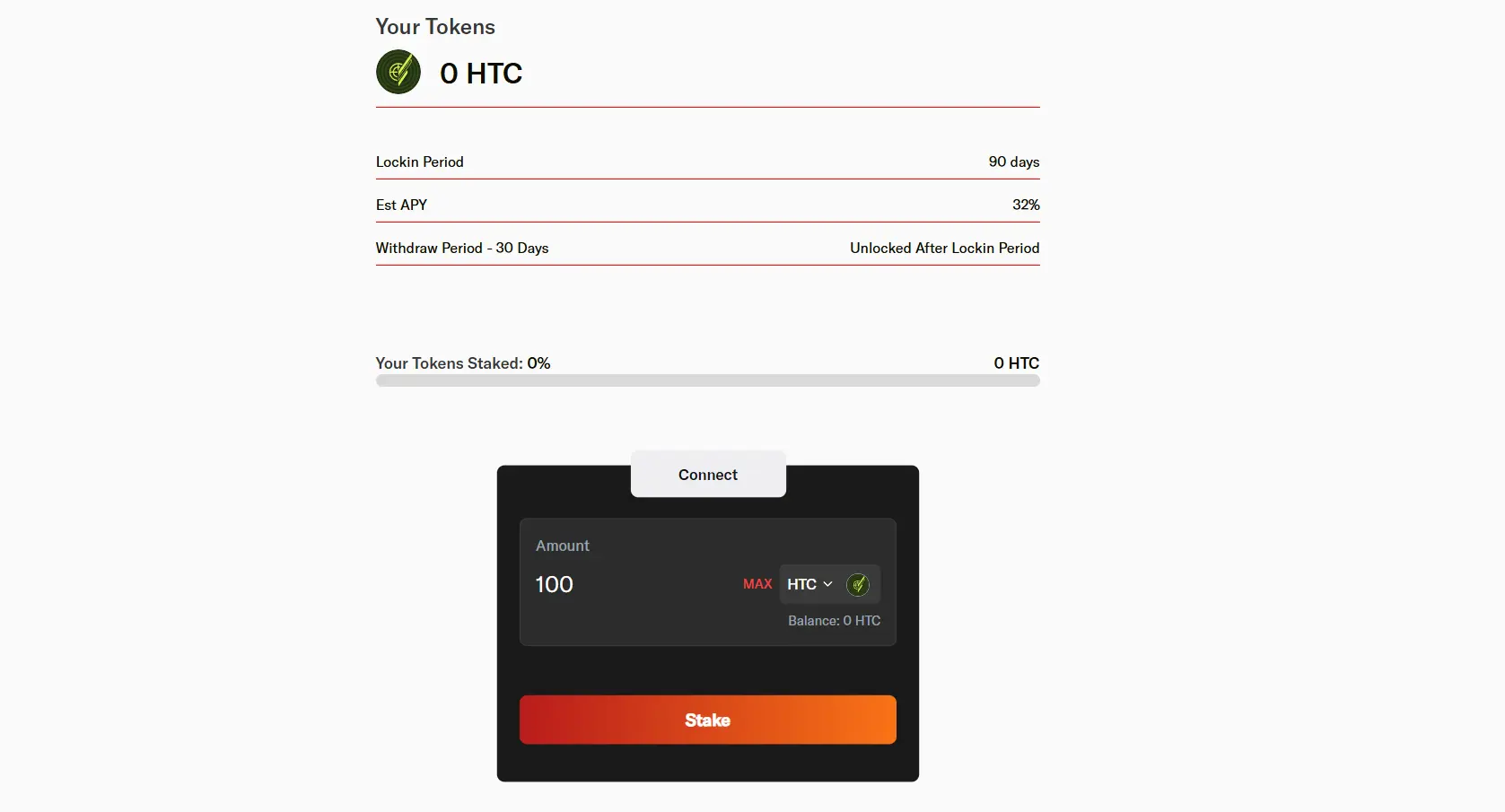
- A clean staking dashboard showing live stake status, accrued rewards, and unlock timelines
Technical Implementation
The staking contracts were written in Solidity with time-lock mechanisms that enforce staking durations on-chain rather than relying on frontend validation — the contract itself controls when a stake can be withdrawn, not the UI. Reward algorithms were designed to be deterministic and transparent so any user could independently verify their accrued rewards against the contract state. Web3.js connects the React frontend to the contracts, with the dashboard pulling live staking data from on-chain reads rather than a separate database that could fall out of sync. Anti-exploitation safeguards were built into the contract logic to block common DeFi attack vectors like flash loan abuse and reward drain exploits, validated through extensive pre-deployment testing.
Challenges & Solutions
Staking platforms are a common target for exploitation — the most obvious attack surface is the reward calculation itself, where rounding errors or timing-based manipulation can let bad actors extract more than their fair share. I spent significant time designing reward algorithms that are both compound-accurate and manipulation-resistant, with contract-level validations that catch edge cases before they become exploits. Time-locked contracts handled the staking lifecycle cleanly — once a stake is committed, the contract controls the unlock, which removes a whole category of potential disputes and UI bugs. Getting the UI right was its own challenge: staking dashboards can overwhelm users with numbers that don't mean anything to them. The goal was to surface only what mattered — your stake, your reward, your unlock date — without hiding the technical depth from users who want it.
Results & Impact
The platform reached a 70% token staking participation rate, which is a strong signal that users trusted the platform enough to lock real value into it. Over $100K in staking rewards was distributed to users through automated contract payouts — no manual intervention required after deployment. Like the HitTheCircle token project, the staking platform maintained a perfect security record through launch and ongoing operation. User engagement across the broader HitTheCircle ecosystem grew by more than 200%, suggesting the staking incentives pulled users back to the platform consistently rather than just attracting one-time participants.