
Project Overview
Freelance marketplaces are a solved problem on the surface — until you look at what they actually get wrong. Trust between strangers is fragile, matching quality is mediocre, and the experience on mobile is usually an afterthought. WorkHalo was built to address all three: blockchain-enabled verification and payment flows for trust, AI-assisted matching for quality, and a unified design system shared across web and mobile so neither platform feels like a port of the other. As lead developer, I came onto the project with an existing MVP and was responsible for taking it to a fully product-ready state — which meant rebuilding parts of the architecture for scale, polishing the UX to a commercial standard, and integrating the AI and blockchain layers that differentiate the platform from a standard gig marketplace. The engagement is ongoing, which reflects the depth of the build rather than scope creep.
Key Features
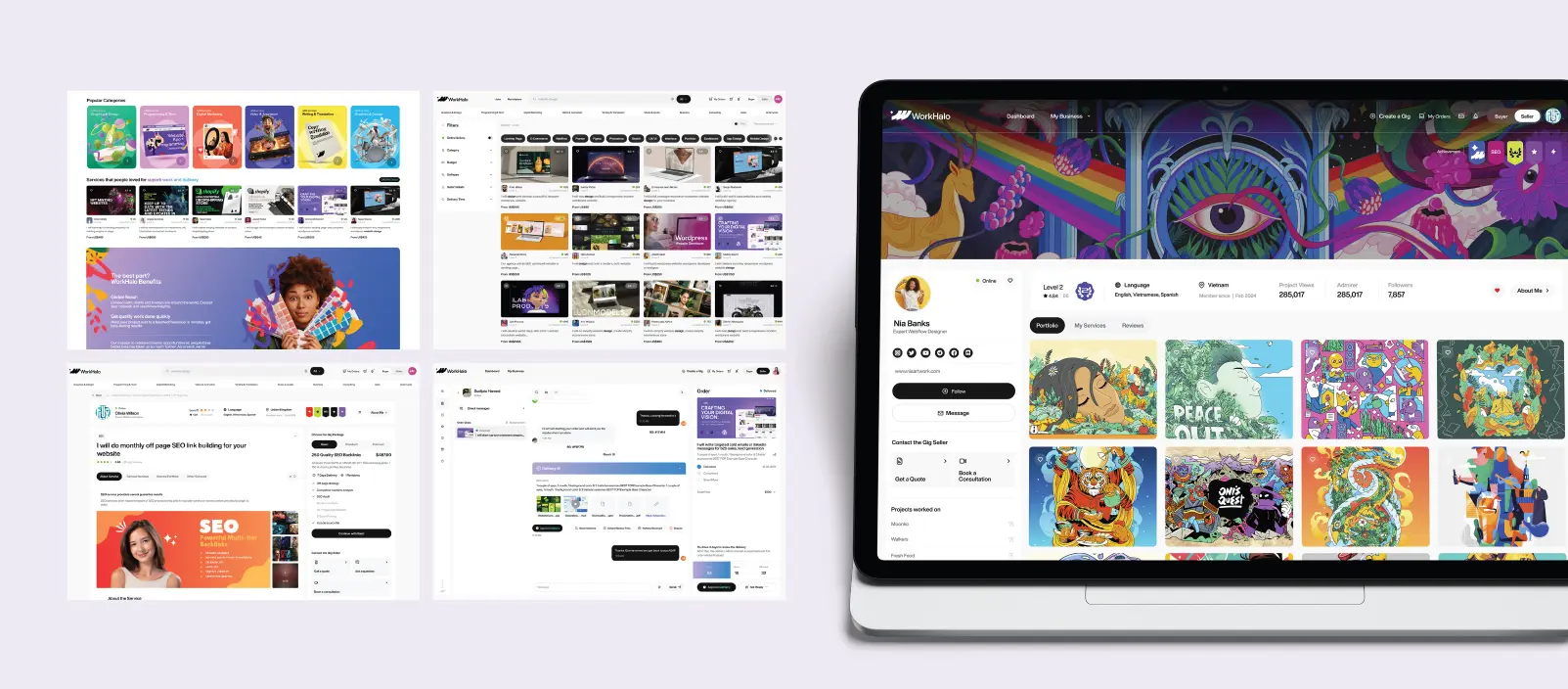
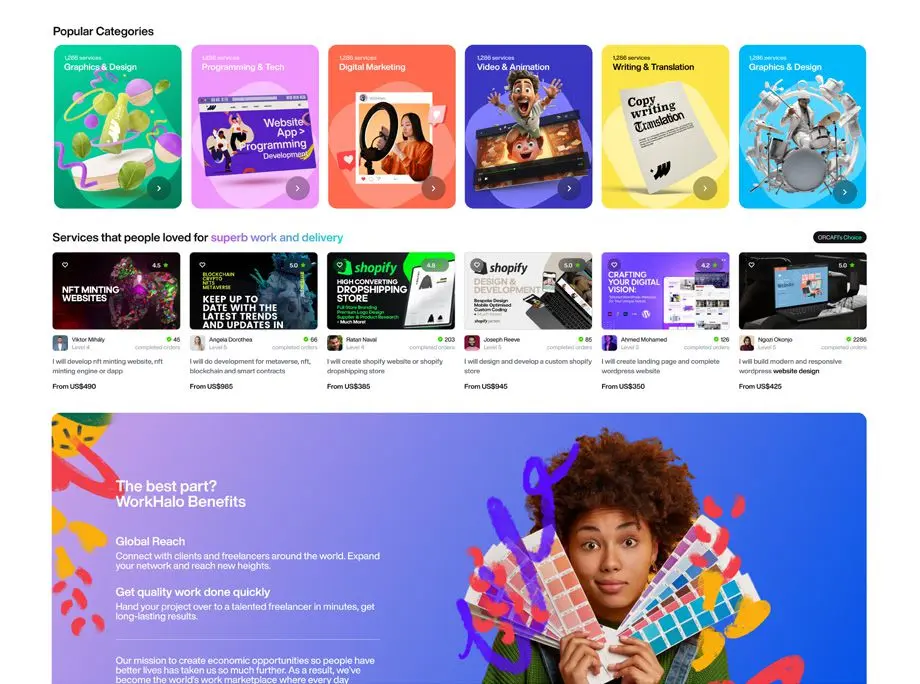
- Freelancer marketplace with detailed profiles, gig listings, and discovery tools for clients
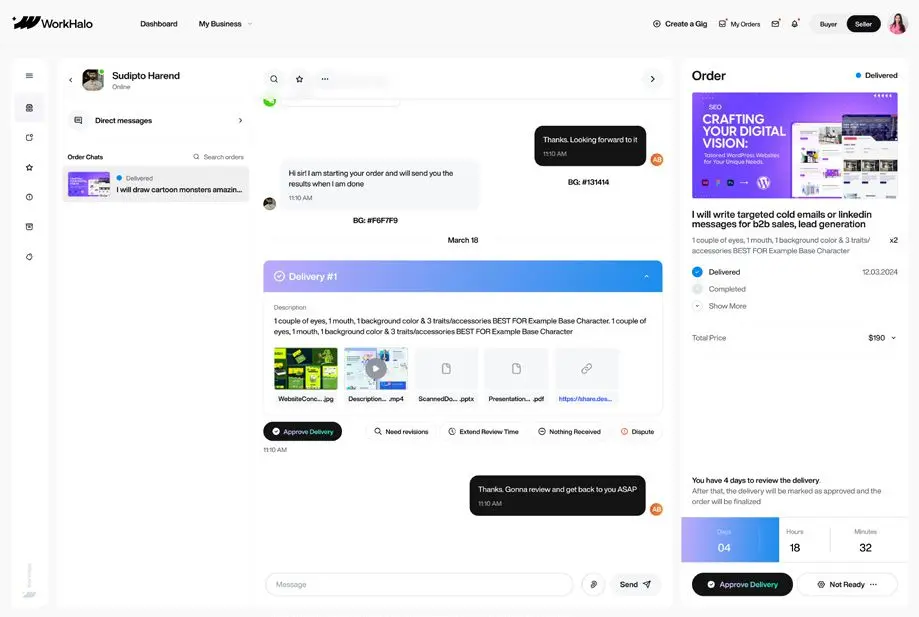
- Client hiring flows and end-to-end project management from brief to delivery
- Blockchain-enabled identity verification, trust signals, and payment support for secure transactions
- AI-assisted freelancer matching, gig recommendations, and workflow automation to reduce manual coordination
- Consistent UX across React Native mobile and Next.js web using a shared component system
- Admin and operations tooling for platform moderation, dispute handling, and operational oversight
Technical Implementation
The web platform runs on Next.js and React, with React Native handling the mobile experience — both sharing a unified UI component library to keep design consistent without duplicating effort across codebases. Node.js powers the backend API, with PostgreSQL managing the relational data that a multi-sided marketplace genuinely requires: user profiles, gig listings, project states, message threads, and transaction records all have structured relationships that need proper indexing to stay performant at scale. Search and listing performance were optimized through caching strategies and query tuning, since marketplace search is typically the highest-traffic and most latency-sensitive path. The blockchain layer handles identity verification and payment flows via Web3 integration, giving clients and freelancers cryptographically verifiable trust signals rather than just platform-assigned ratings. Machine learning models power the matching and recommendation engine, improving relevance over time as more transaction and behavior data accumulates on the platform.
Challenges & Solutions
Multi-sided marketplace architecture is inherently complex — clients and freelancers have fundamentally different workflows, permissions, and data needs, but they interact through the same platform. Getting that architecture modular enough to iterate quickly on either side without breaking the other required deliberate design from the start rather than patching it later. Scalable search and messaging were the two backend areas that needed the most work during the MVP-to-product transition — naive implementations that worked fine at small scale became bottlenecks quickly, so we rebuilt those paths with proper caching, indexing, and query optimization. Blockchain payment flows added a layer of UX complexity that most users aren't expecting: confirmations take time, gas costs vary, and failure states need to be handled gracefully without confusing non-technical users. We designed the payment UX to abstract that complexity while keeping the trust benefits visible. Delivering a consistent experience across web and mobile required committing to a shared design system early — without it, the two platforms would have diverged and doubled the design maintenance burden.
Results & Impact
WorkHalo moved from MVP to a fully product-ready freelance marketplace with a scalable architecture, polished cross-platform UX, and AI and blockchain integrations that meaningfully differentiate it from commodity gig platforms. The platform is positioned for launch with infrastructure that won't need to be rearchitected as user volume grows — the database design, caching strategy, and API layer were all built with scale as a first-class requirement rather than a later concern. As an ongoing engagement, the build continues to evolve, which reflects a level of platform complexity and product ambition that goes well beyond a standard marketplace build.