Project Overview
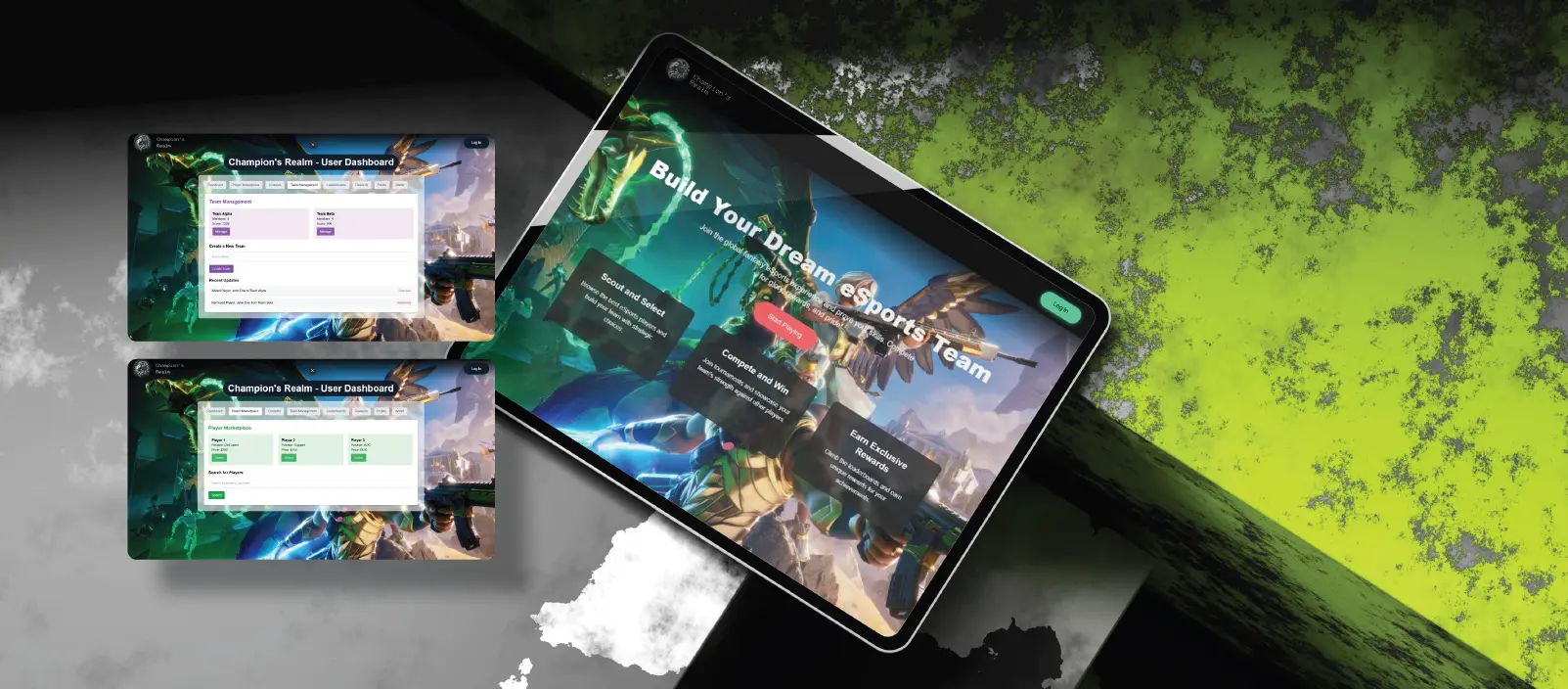
Competitive Fortnite has a real community infrastructure problem — players coordinate through Discord servers, spreadsheets, and direct messages, none of which are built for team management or competitive workflows. Champion's Realm set out to fix that with a dedicated platform where players could build teams, manage rosters, and engage with a competitive community in one place. I built the platform solo over two to three months, taking it from concept to a working MVP that went into beta with over 1,000 active players. The scope covered the full stack — frontend dashboards, backend API, database design, real-time updates, and the iterative feedback loop during beta that shaped which features actually mattered to the community.
Key Features
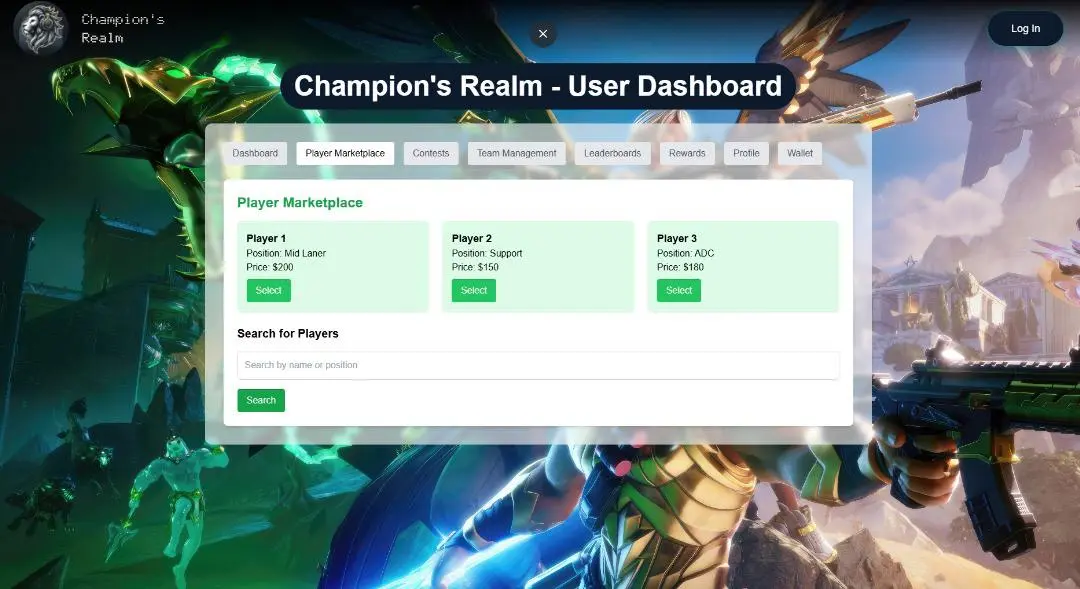
- Dream-team building tools designed specifically for Fortnite competitive play and roster management
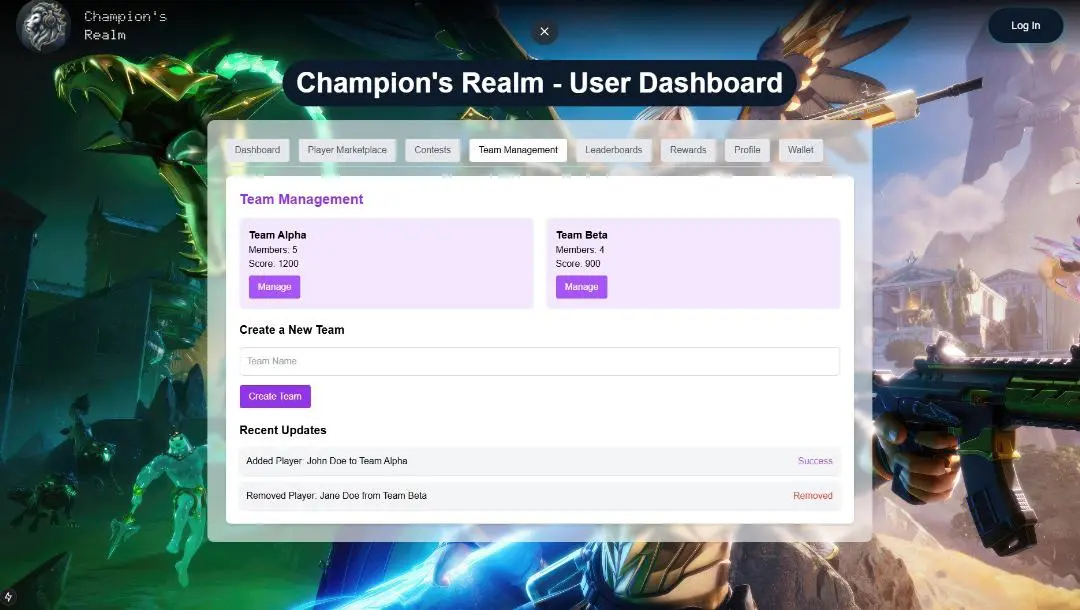
- User dashboards giving players a clear view of their team status, competitive standing, and activity
- Team management workflows covering player invites, role assignments, and squad coordination
- Real-time updates keeping team and competitive data current without manual refreshes
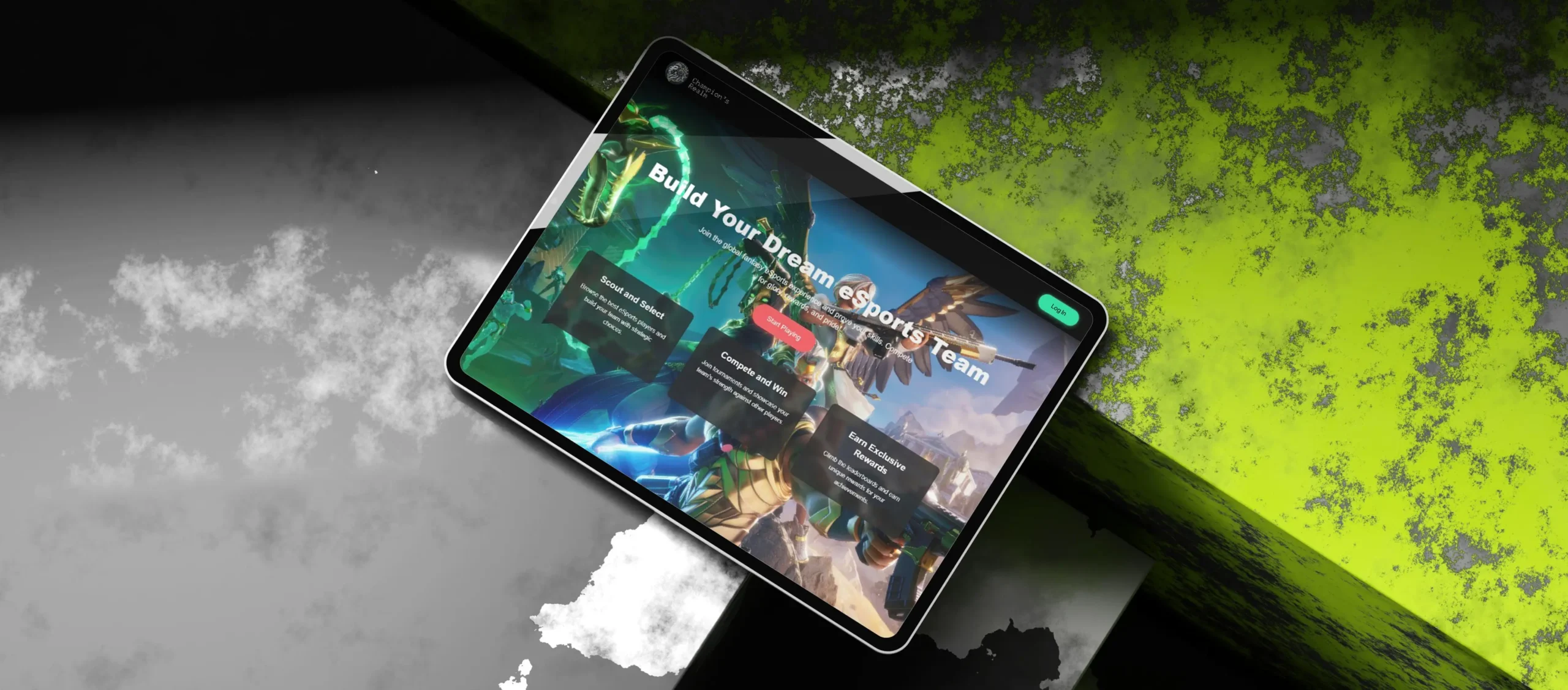
- Responsive web design that holds up on both desktop and mobile for players across devices
- Scalable backend architecture built to handle a growing player base beyond the initial beta cohort
Technical Implementation
The platform was built on Next.js and React for a fast, SEO-friendly frontend with server-side rendering on public-facing pages and dynamic client-side updates inside the dashboard. Node.js powers the backend API, with PostgreSQL storing the relational data that team and player management genuinely requires — roster memberships, competitive records, and user relationships don't lend themselves to a flat data model. Real-time updates were implemented to keep team dashboards live without requiring page refreshes, which matters in a competitive context where roster changes or match updates need to surface immediately. Backend query optimization and caching were applied specifically around the highest-traffic data paths — player lookups and team composition reads — to keep response times consistent as beta usage grew. The architecture was designed with scale in mind from the start, so adding more players and teams wouldn't require rearchitecting the data layer later.
Challenges & Solutions
The UX challenge with any competitive platform is that the user base has high expectations and low patience — competitive gamers are used to polished, fast interfaces from the games themselves, and a clunky team management tool won't get used no matter how complete it is. Significant time went into making the team-building flows feel intuitive and low-friction, with modular UI patterns that kept the interface clean even as feature complexity grew during beta. Performance under real beta usage required targeted backend optimization — some query patterns that looked fine under light load became bottlenecks once 1,000+ players were actively using the platform simultaneously. Caching frequently accessed data resolved the worst of these without over-engineering the backend. The beta period itself was treated as a development input rather than just a testing phase — telemetry and direct player feedback drove prioritization decisions on which features to iterate on and which to defer, keeping the build cycle focused on what the community actually used.
Results & Impact
Champion's Realm launched its MVP into beta with over 1,000 active players engaging with the platform — meaningful validation that the team-building concept had genuine demand in the competitive Fortnite community. Reaching that number as a solo-built MVP in two to three months reflects both the technical execution and the product decisions made during development. The platform's architecture is ready to scale beyond beta without a rebuild, which positions Champion's Realm to grow its player base without hitting technical ceilings early.